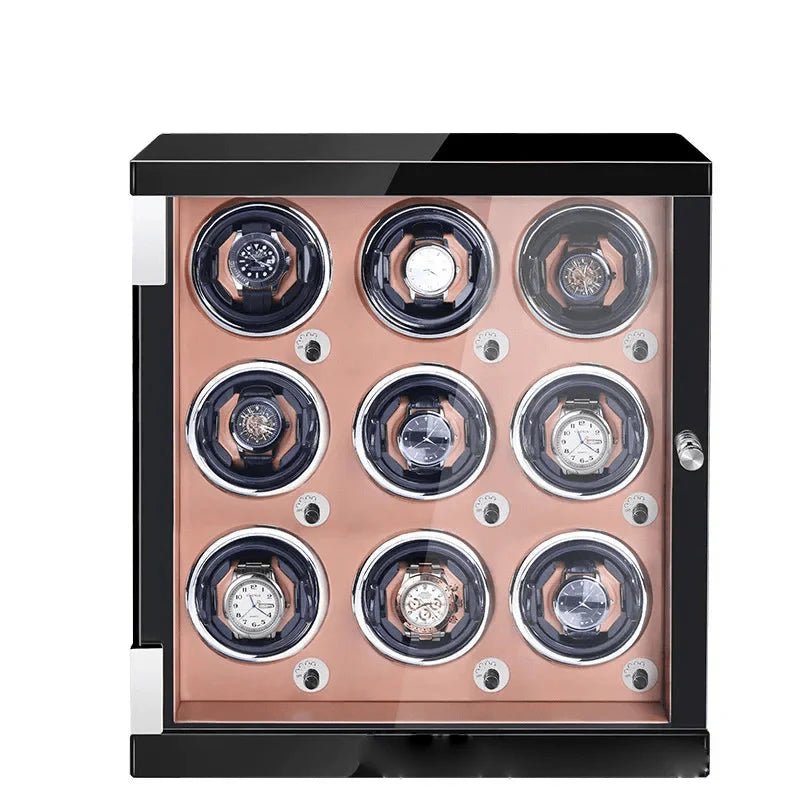
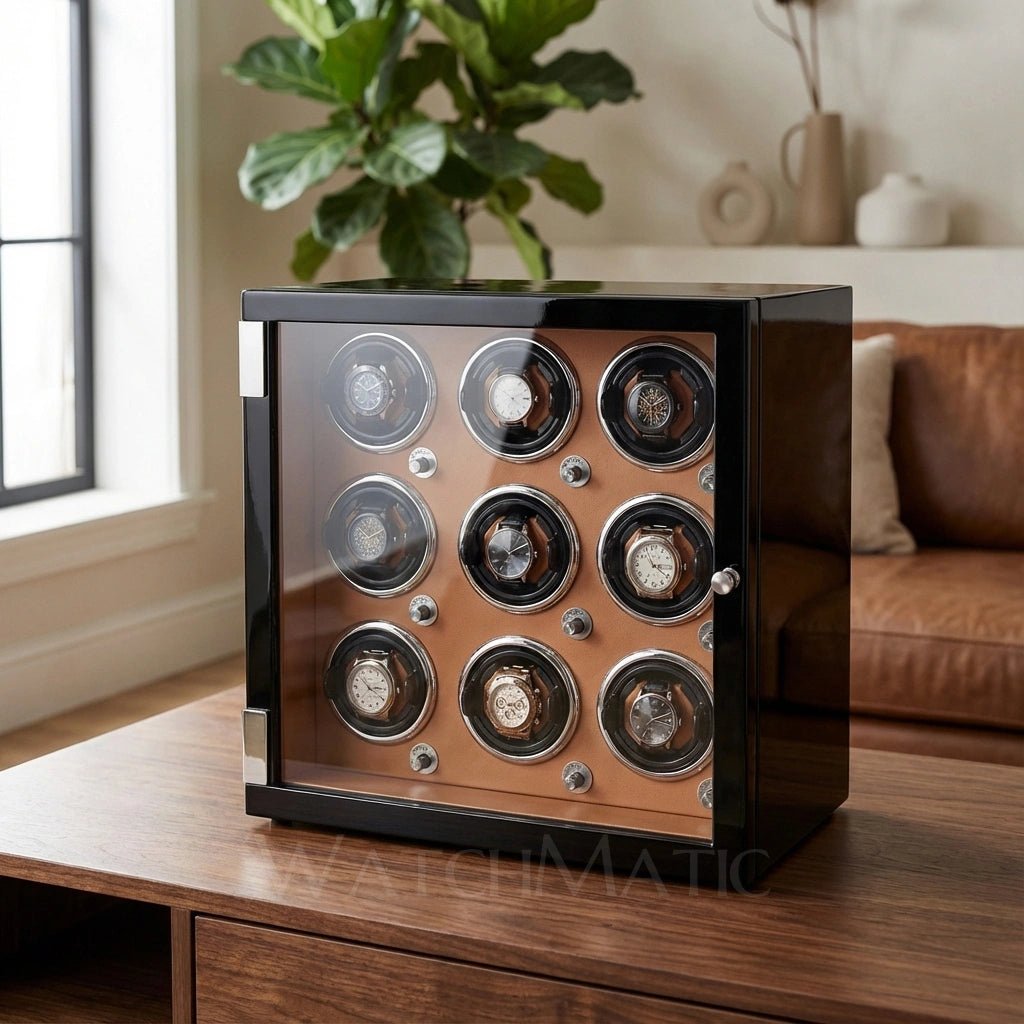
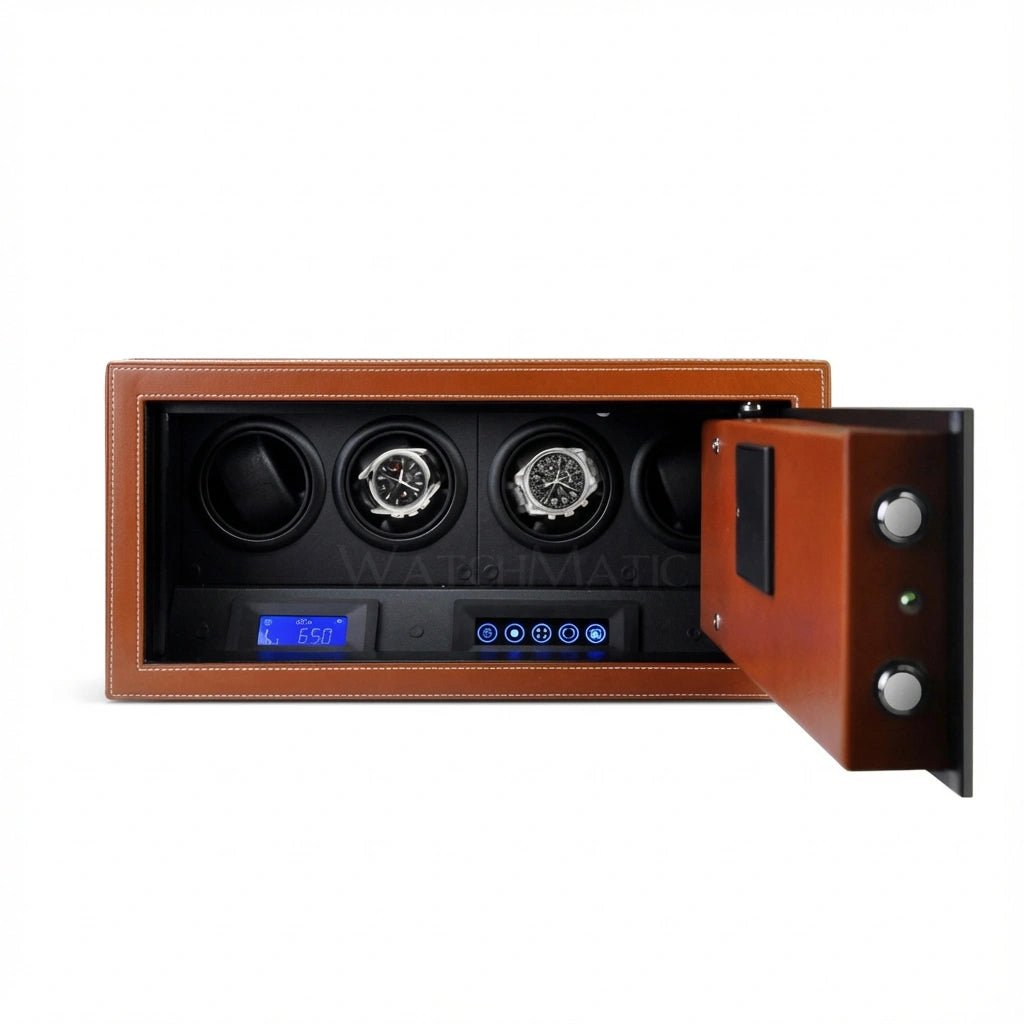
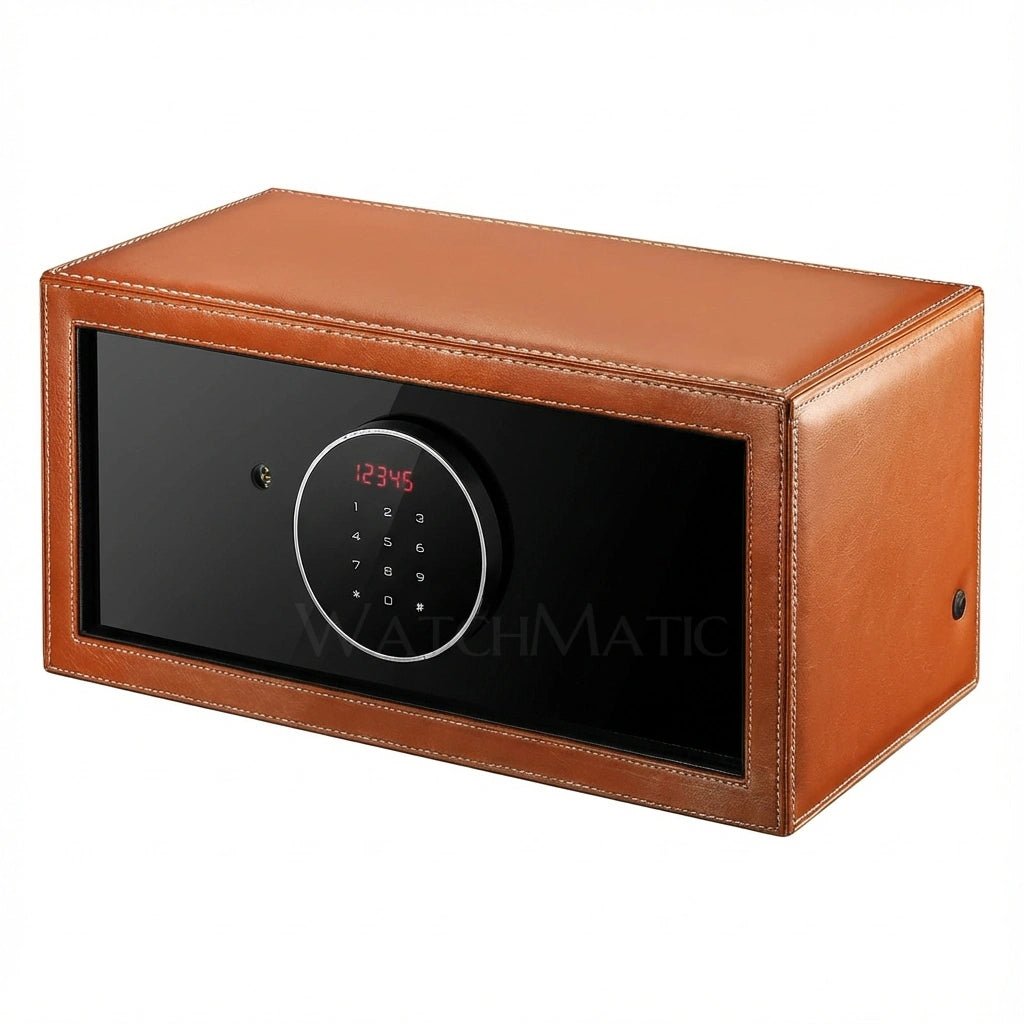
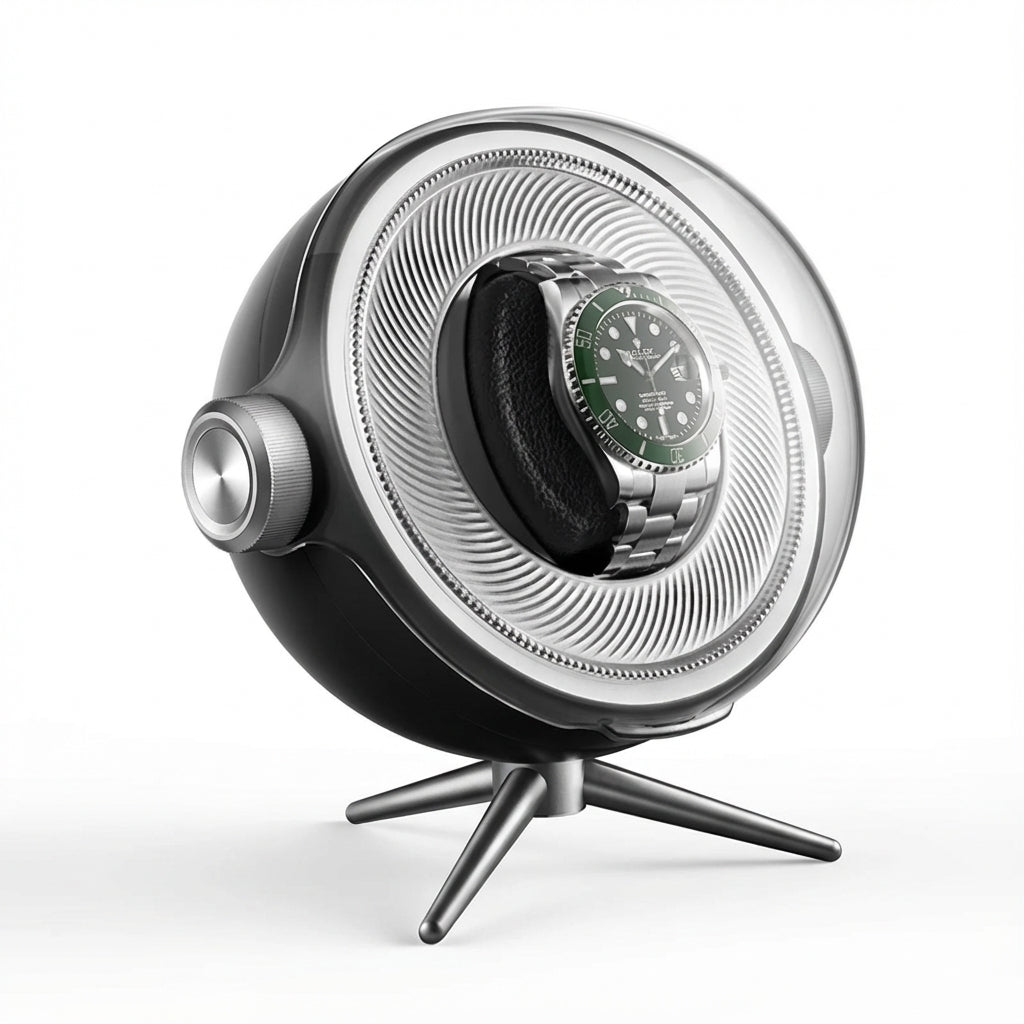
If you’ve ever browsed watch winders beyond entry-level models, you’ve probably come across the term “independent control.”
It sounds technical. It sounds premium.
But what does it actually mean in practice and does it genuinely matter for your collection?
For collectors who rotate multiple automatic watches, this feature can be either a quiet essential or an unnecessary upgrade, depending on how you wear and care for your timepieces. Let’s break it down in plain terms, grounded in real-world use rather than marketing language.
What “Independent Control” Actually Means
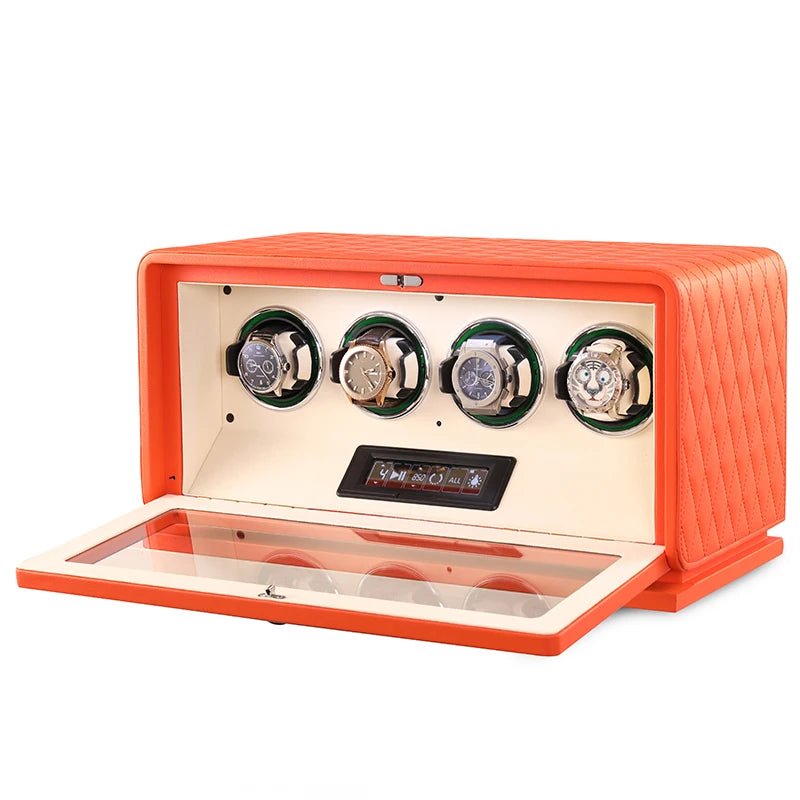
In simple terms, independent control means that each watch position in a watch winder operates separately.
Instead of one motor and one setting powering all watches at the same speed and direction, every slot can be adjusted individually - often with its own:
- Rotation direction (clockwise, counterclockwise, or alternating)
- Turns Per Day (TPD)
- Start/stop timing
This allows each watch to receive winding behavior that matches its specific movement, rather than forcing all watches to conform to a single setting.
Many modern watch winders now offer independent control to accommodate different automatic movements within the same collection.
Why This Matters for Automatic Watches
Automatic watches are not standardized machines.
Different movements are designed to wind efficiently under different conditions.
Some movements prefer clockwise rotation. Others rely on counterclockwise motion. Many modern calibers accept both - but not always with the same efficiency.
When all watches share one global setting, compromises are inevitable. Some watches may be underwound. Others may be overwound unnecessarily. While occasional mismatch won’t instantly damage a movement, long-term inconsistency can affect accuracy and lubrication behavior over time.
Independent control removes that compromise entirely.
The Real-World Scenario Collectors Face
Imagine this common situation:
You own:
- A modern sports watch with a robust bi-directional winding system
- A dress watch with a more sensitive unidirectional rotor
- A vintage automatic that prefers lower TPD
If all three watches are placed on a winder without independent control, you’re forced to choose one setting that works “well enough” for all of them—but isn’t ideal for any of them.
With independent control, each watch gets exactly what it needs. Nothing more. Nothing less.
Is Independent Control Necessary for Everyone?
Not necessarily.
If:
- You own one or two automatic watches
- They share similar movement characteristics
- You wear them frequently and only use a winder occasionally
Then independent control is a nice-to-have, not a requirement.
- However, for collectors who:
- Rotate watches weekly or seasonally
- Own watches from multiple brands or eras
Use a winder as a long-term storage solution
Independent control becomes less of a luxury feature and more of a responsible care decision.
Common Misconceptions About Independent Control
“It’s only for high-end collectors.”
Not true. It’s about diversity of movements, not price. A mixed collection of mid-range watches can benefit just as much as a collection of high complications.
“More control means more wear.”
Actually, the opposite. Properly matched winding reduces unnecessary motion and stress on components.
“It’s too complicated to use.”
Modern independent control systems are designed to be intuitive. Once set, most require no daily interaction.
Independent Control vs. Global Control: The Key Difference
| Feature | Global Control | Independent Control |
|---|---|---|
| One setting for all watches | Yes | No |
| Movement-specific tuning | No | Yes |
| Suitable for mixed collections | Limited | Ideal |
| Long-term precision care | Moderate | High |
This distinction is less about convenience and more about precision over time.
When Independent Control Makes the Most Sense
Independent control is particularly valuable when:
- Watches are worn infrequently but kept running
- Movements vary significantly across brands
- Accuracy consistency matters
- You want to minimize unnecessary rotor motion
It aligns with a mindset many collectors eventually adopt:
less intervention, better outcomes.
A Collector’s Perspective
Seasoned collectors often say the same thing after upgrading to independent control:
“I didn’t realize how much guesswork I was doing until I didn’t have to anymore.”
That sentiment captures the real value of the feature. It doesn’t change how your watches look. It changes how confidently you care for them.
Final Thoughts
Independent control isn’t about complexity or prestige.
It’s about respecting the mechanical differences between watches and allowing each movement to operate as intended.
If your collection is growing or already diverse - this feature quietly becomes one of the most practical decisions you can make.
And like many thoughtful upgrades in watch collecting, its value isn’t loud.
It simply works in the background, exactly as it should.